- Resolution on the National Programme for the Prevention of Domestic Violence and Violence Against Women 2024–2029 (objective 3): The project directly contributes to the development of highly qualified professionals, empowering them to identify violence at an early stage and respond appropriately, while systematically developing access to supervision.
- Strategy for the Development of Healthcare at the Primary Level until 2031 (objective 8): The project invests in the education and training of healthcare professionals and fellow workers, thereby promoting and implementing the principle of zero tolerance for violence in practice.
- European Cohesion Policy Programme 2021–2027 in Slovenia (policy objective 4, priority 7, specific objective ESO4.11): The project strengthens the effectiveness and resilience of the healthcare system by empowering professionals and providing professional support in responding to victims of violence.
- Professional Guidelines for Addressing Domestic Violence in the Provision of Healthcare Services: The project directly incorporates the content of these guidelines into its training programmes, with a focus on understanding the relevant legal framework, strengthening cross-sectoral cooperation and applying experiential learning approaches.
Together Against Domestic Violence – empowering healthcare professionals and strengthening interinstitutional cooperation for more effective responses to domestic violence and violence against women
The Nurses and Midwives Association of Slovenia– association of professional societies of nurses, midwives and nursing assistants in Slovenia, as the project lead, is launching the three-year project »Together Against Domestic Violence«. The project is implemented through the Association’s working group on non-violence in nursing and midwifery, which has been actively working in the field of preventing and addressing violence since 2000.
The project is being carried out in partnership with the Association SOS Helpline for Women and Children – Victims of Violence and the Association of Centres for Social Work of Slovenia.
The project directly addresses systemic gaps and aims, by 2029, to empower 1,000 healthcare professionals and fellow workers across Slovenia to identify and respond appropriately to domestic violence. It will also strengthen cooperation between the healthcare sector, centres for social work, the police, the state prosecution service and non-governmental organisations.
Highlights from the kick-off meeting of the project partners:
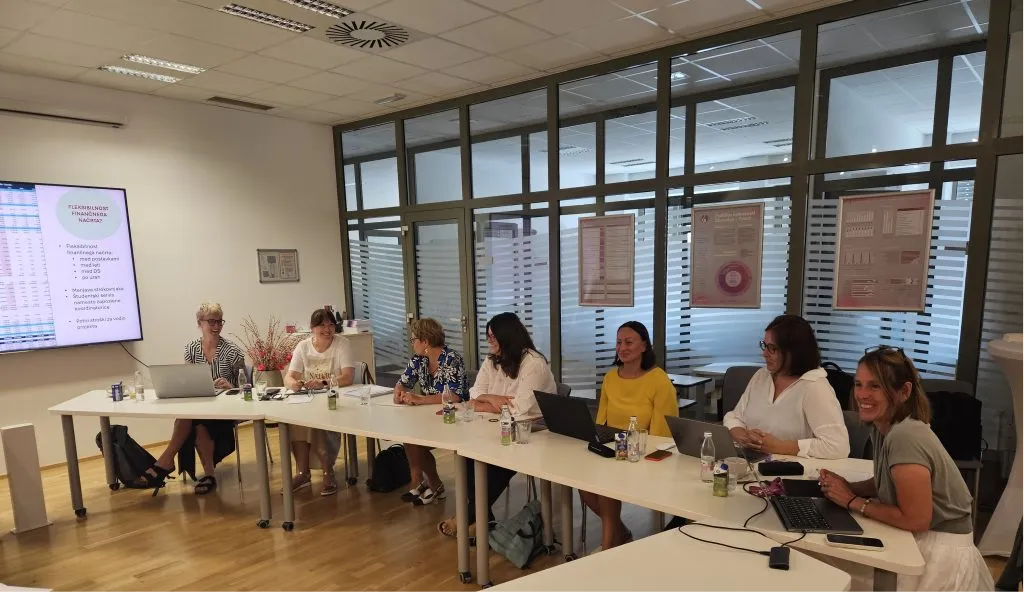
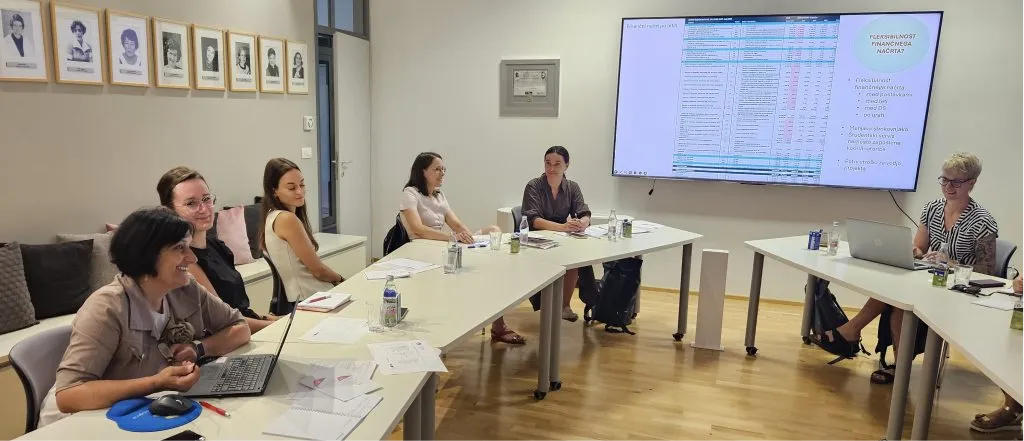
Project at a glance
- Project name: Together Against Domestic Violence (empowering healthcare professionals and strengthening interinstitutional cooperation for more effective responses to domestic violence against women)
- Umbrella project of the Ministry of Health of the Republic of Slovenia: The project is implemented as part of the broader Ministry of Health project “Development and Establishment of New Sources of Support and Programmes and Strengthening Competences in the Field of Mental Health.”
- Duration: Three-year project running until 30 June 2029.
- Main objective: Training 1,000 healthcare professionals and fellow workers.
- Geographical coverage: All 11 statistical regions of Slovenia.
- Professional network: 25 trained trainers and 20–25 trained supervisors.
- *Project value and co-financing: EUR 239.280,87. The project is co-financed by the Republic of Slovenia (Ministry of Health) and the European Union under the European Cohesion Policy Programme 2021–2027 (Priority 7, Long-term Care, Health and Social Inclusion, Specific Objective ESO4.11).
Challenges in healthcare and gaps addressed by the project
- Insufficient identification in practice: Despite adopted strategies, international commitments, legislation and professional guidelines, the identification and response to domestic violence and violence against women within the Slovenian healthcare system remain insufficient.
- Main reasons for staff inaction: Fear among healthcare staff of retaliation by perpetrators of violance, a perceived lack of capacity to act, workload pressures, insufficient experience and knowledge to provide appropriate support, hierarchical decision-making, and insufficient cooperation with relevant services.
- Insufficient competences: Issues related to violence are not systematically incorporated into regular education and training, while previous approaches have been fragmented and insufficiently connected.
- Lack of professional support: Healthcare professionals and fellow workers lack sustained professional and psychosocial support (supervision, peer consultation and other forms of support), when responding to cases of domestic violence.
- Weak cooperation: Interinstitutional and cross-sectoral cooperation in responding to violence at the local and regional levels remains insufficiently developed.
What the Project offers and key activities
- A comprehensive and innovative programme: The partners address these challenges through a comprehensive, practice-oriented programme of education and professional support designed to establish sustainable training tools.
- Establishing of an interdisciplinary team: A network of 25 trainers will be established, bringing together leading national experts from the project partner organisations, as well as experienced professionals from regional branches of social work centres and the police.
- 16-hour training programme for healthcare professionals and fellow workers:
- Day 1 – online theoretical component: Self-directed learning using digital materials available through the online library, followed by a final assessment test.
- Day 2 – practical, experiential training: The training will be delivered 20 times across all 11 regions, in groups of up to 15 participants, in cooperation with Slovenian regional professional associations of nurses, midwives and healthcare assistants.
- Permanent online library: A digital library of 15 up-to-date professional resources will be established and remain freely accessible beyond the end of the project. It will cover relevant legislation, the identification of and response to violence in healthcare and social care institutions, the responsibilities of other relevant services, and interinstitutional cooperation.
- Professional and psychosocial support (supervision): All training participants will have access to professional support when dealing with violence, including resources available in the online library, individual telephone consultations and 30 online support sessions.
- Development of supervision within the Association: A 400-hour training programme will be provided for 20–25 (or 25–30) supervisors. The programme has been developed in accordance with the international ANSE standard (L. Cajvert model) and represents the first project of this kind within the Association. Upon completion, supervisors will be entered into the national register of special professional competences and will provide individual and group supervision to healthcare professionals and fellow workers (an estimated 150 places).
- Strengthening interinstitutional cooperation: Six carefully planned thematic professional events will be organised to strengthen cooperation between healthcare, social care, the police (or state prosecution) service and non-governmental organisations at the local, regional and national levels. A consultation at the Council of state of the Republic of Slovenia is also planned, where current aspects of violence will be presented to members of parliament and other decision-makers.
- Monitoring and evaluation: Ongoing and final qualitative and quantitative evaluation of the programmes will be carried out through questionnaires, tests, focus groups and interviews, followed by the preparation of recommendations for future projects.
Who Is the project for (target groups):
- Healthcare professionals and fellow workers: In particular, those working at key entry points into the healthcare system, including family medicine, emergency care, gynaecology, community nursing, midwifery and mental health centres. The project will provide them with greater professional autonomy, a better understanding of procedures, more effective protection of victims, and access to professional support and support in managing the emotional and professional challenges associated with responding to domestic violence.
- Professionals working at centres for social work, the police, the state prosecution service and NGOs: The project will facilitate coordinated action, rapid information exchange, joint preventive activities and stronger interdisciplinary cooperation at the local and regional levels.
Alignment with National and International Strategic Documents
National documents and guidelines
International documents and frameworks
- Council of Europe Convention on Preventing and Combating Violence Against Women and Domestic Violence (Istanbul Convention): The project contributes to prevention and victim protection through Article 15 (training of professionals and prevention of secondary victimisation of staff) and Article 19 (providing victims with timely information on available support services and measures).
- World Health Organization (WHO) guidance:
- Transforming mental health roadmap: Strengthens the practical implementation of supervision for professional staff.
- Guidance on mental health policy: Incorporates measures within the healthcare sector to support victims of violence.
- Responding to intimate partner and sexual violence: International evidence-based practices and approaches, as well as protocols for responding to and reporting violence, will be integrated directly into the training content.